Phone:
+44 749 486 2650
Address:
London, United Kingdom.

Phone:
+44 749 486 2650
Address:
London, United Kingdom.
Welcome to the 5th edition of the Energyz Black Community Spotlight series, a periodic publication
10th November 2025 | Energyz Black
Welcome to the 5th edition of the Energyz Black Community Spotlight series, a periodic publication aimed at highlighting, engaging with, and empowering Black professionals in the energy sector.
Can you share a bit about your journey into the energy and sustainability sector? What initially drew you to this field?
Maeva: I studied Management with Finance at Warwick Business School in the UK. While I was initially drawn to finance, I also wanted to include an element of development impact. Coming from Madagascar, where prolonged power cuts are frequent , I wondered why reliable energy access was such a challenge.
That question stayed with me, and I eventually decided to pursue a career in the energy sector. I completed a Master’s in Energy Trade and Finance at Bayes Business School, which gave me exposure to both conventional and renewable power and the global energy landscape. At first, I had a strong interest for oil and gas, but as awareness of the impacts of climate change grew and renewable technologies advanced, I became increasingly drawn to less carbon intensive power sources.
I went on to complete a Master’s in Energy Economics at the French Institute of Petroleum, where I deepened my knowledge of renewables and their key contributions to our energy systems. After graduating, I joined Globeleq as an intern, and what was meant to be a six-month internship has turned into nearly six years with the company. I am part of the Business Development team located in London, but all of our power plants are in Africa, which allows me to work internationally while staying connected to my home continent.
What excites you most about your current role at Globeleq?
Maeva: There is a great the sense of fulfilment. Our work is about bringing energy solutions that support Africa’s growth while contributing to the energy transition.
Globeleq, owned by British International Investment, the UK’s development finance institution, and Norfund, Norway’s development finance institution, is the leading developer, owner and operator of electricity generation in Africa. Since 2002, Globeleq has built a diverse portfolio of independent renewable and gas power plants, generating 1,794 MW in 17 locations across seven countries including South Africa, Mozambique, Kenya, Egypt and Côte d’Ivoire.
As a Senior Associate in Business Development, I work on renewable power projects projects from origination through pre-construction, structuring complex deals and collaborating with engineering, financial modelling, legal, and ESG teams to design solutions that are both technically sound and commercially viable. I also engage a broad range of external stakeholders to ensure our projects meet off-taker needs and deliver sustainable, long-term value.
What excites me is the diversity of challenges and the impact: in some markets, our role is to reduce energy poverty; in others, it’s helping large energy consumers decarbonise or providing solutions that enhance grid bringing stability which strengthens the energy infrastructure and support a more resilient and decarbonized power sector. A good example is the Red Sands battery energy storage project (Red Sands BESS) in South Africa, which is the largest standalone BESS plant in Africa to reach commercial close and will be storing energy during off-peak times and releasing it during periods of peak demand. I also enjoy the international collaboration, working with colleagues across Africa and , Europe. It feels special to live in London while contributing to Africa’s development.
Have you faced regulatory or cultural challenges in your work across regions?
Maeva: Every country and market has its own dynamics. We work with different types of offtakers each with different needs and priorities. Making sure our project are resilient and relevant is crucial. It requires experience, flexibility, and an understanding that the context can change quickly. That’s both the challenge and the beauty of working across diverse African markets.
How have you navigated working in what is often seen as a male-dominated industry?
Maeva: The energy sector is still male-dominated. I realized that early in my career. Conferences, meetings, and industry spaces often have limited female representation.
What has helped me is mentorship and community. I’ve been fortunate to have mentors, both male and female, who have guided me through key moments and opened opportunities.
At the same time, I believe everyone can contribute equally regardless of gender. Mentorship and networks like Energyz Black are powerful ways to create supportive communities. And if those spaces don’t exist, we shouldn’t be afraid to build them.
You were recognized as one of the Women in Hydrogen 50 Rising Stars. What did that mean to you?
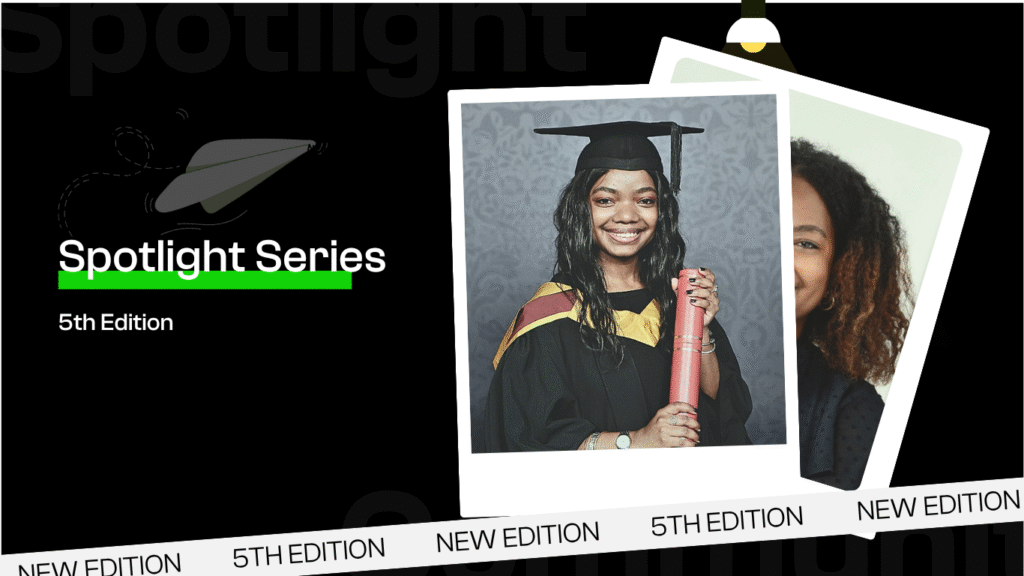
Maeva: That was in 2023, during an exciting period when our team was developing a large-scale green hydrogen project in Egypt. We were a small group working on a pioneering technology for our company, and it gave me the chance to take ownership of workstreams and grow quickly.
I came across the award through the Petroleum Economist and thought it would be a great way to spotlight Africa’s role in green hydrogen. With my manager’s support, we submitted a nomination, and I was fortunate to be selected.
For me, the award reinforced the importance of stepping out of your comfort zone and seizing opportunities. It also highlighted how critical platforms that amplify women’s voices are, because they encourage others, build community, and ensure young professionals see themselves represented.
What advice would you give to young professionals entering the energy and sustainability sector?
Maeva: First, keep upskilling. The sector is broad, and there is room for different skills spanning from engineering, finance, law, and policy. Stay curious, follow industry news, and seek out experiences that build your expertise.
Second, build your network. I truly believe your network is part of your net worth. Don’t be afraid to reach out and attend events, even if it feels uncomfortable at first. Opportunities often come through people.
Third, have a can-do attitude. Be willing to take on responsibilities, even if you don’t have all the answers yet. Learn fast, ask questions, and show initiative. Soft skills like effective communication, problem-solving, and the ability to work under pressure are just as important as technical knowledge.
Q: What would you say to young Black professionals considering a career in energy?
Maeva: Don’t let being the “only one in the room” discourage you. Early in my career, I sometimes felt out of place, but I realized there is always a reason you’re there, your skills, your qualifications, your perspective.
Diversity brings value. By being yourself and contributing your ideas, you’re enriching the discussion.
Q: How do you see the energy transition evolving over the next decade?
Maeva: I think it will accelerate, but unevenly. Africa has a unique opportunity because it’s still developing its energy systems and has abundant natural resources to utilise renewables and less carbon intensive technologies as a core pillar. Some countries will move faster than others depending on policy, resources, and access to financing. Globally, innovation in technologies such as battery energy storage, the rapid growth of large energy consuming industries such as data centres will play a huge role in shaping the energy landscape.
Q: What has been the most interesting project you’ve worked on, and why was it the most interesting to you?
Maeva: I’d say the Green Hydrogen Project in Egypt. It was fascinating because the technology was completely new to me.
What made it especially exciting is that the technology is still in its early stages, so no country is really “behind.” That creates a unique opportunity for African countries to step forward and be part of shaping a new global industry. Egypt, in particular, has strong renewable resources, existing infrastructure, and close proximity to Europe, making it a strategic location.
The project gave me the chance to see how African countries can position themselves as key players in this nascent industry. It was also international, I travelled to Copenhagen, Belgium, and other places, engaging with European companies and looking at how hydrogen was being developed globally. It wasn’t just about Africa, it was about connecting Africa to the world. Overall, it was large-scale, innovative, and incredibly exciting. I’d say it was one of the most memorable and rewarding experiences of my career
The 5th edition of the Energyz Black Community Spotlight was compiled by CollabQuest team.
For more information, visit www.energyzblack.co.uk or follow us across our social media platforms, Energyz Black.
